

The Truth About Alcohol and Hormone Balance (UK Guide)A glass of wine after work, bubbly at brunch, cocktails at the weekend — alcohol is woven into everyday life in the UK. But if you’re trying to conceive, tracking your ovulation, or simply curious about your hormonal health, you may have wondered: is that innocent glass of wine quietly disrupting your menstrual cycle?
The conversation around fertility often focuses on major lifestyle factors like smoking, diet, or weight, but alcohol sits in a grey zone. Some say the odd drink is harmless. Others insist any alcohol at all is dangerous for hormonal balance. The truth lies somewhere in between — and it’s more interesting than most people expect.
Let’s uncork the facts, separate myths from reality, and explore exactly how alcohol affects your cycle, your hormones, and your chances of getting pregnant.
How Alcohol Actually Affects the Menstrual Cycle
Alcohol doesn’t just give you a buzz — it interacts with hormones that regulate your cycle. Even moderate drinking can influence:
1. Oestrogen Levels
ADVERTISEMENT
ADVERTISEMENTKate Spade Autumn/Winter Sale |
Alcohol can temporarily increase oestrogen levels. While that may not sound concerning, too much oestrogen can interfere with ovulation, shorten your luteal phase, or make cycles more unpredictable.
2. Progesterone Production
Progesterone is essential after ovulation to support implantation. Some studies suggest alcohol may reduce progesterone, leading to:
- weaker ovulation
- spotting
- shorter luteal phases
- difficulty sustaining early implantation
3. Ovulation Timing
Research shows even light to moderate drinking (1–6 drinks per week) can shift ovulation earlier or later, depending on the timing of alcohol consumption within the cycle.
4. Inflammation and Blood Sugar
Alcohol affects insulin, blood sugar, and inflammatory markers — all of which play a role in cycle regularity and hormone balance.
Does One Glass Really Matter?
The million-pound question.
The honest answer?
For most people, one or two glasses per week is unlikely to wreak havoc on your cycle.
However…
Your sensitivity to alcohol may be higher if:
- you already have irregular cycles
- you have PCOS or endometriosis
- you’re in your luteal phase
- you’re undergoing fertility treatment
- your progesterone tends to be low
- you’re over 35
Some people notice their temperature charts, ovulation predictor kits, or PMS symptoms shift dramatically after only a small amount of alcohol.
Every body is different — but alcohol is more powerful on hormones than many realise.
Alcohol and Trying to Conceive: What the Studies Say
A growing body of UK and international research suggests:
- Heavy drinking reduces fertility significantly.
- Moderate drinking (3–6 drinks per week) may reduce conception chances by up to 26%.
- Drinking in the luteal phase seems more disruptive than drinking in follicular phase.
- Even low-level drinking may affect AMH, FSH, and ovulation quality.
- For people going through IVF, outcomes are poorer when either partner drinks regularly.
The NHS advises abstaining when pregnant or trying to conceive — not because one drink will cause harm, but because a “safe” threshold isn’t clearly defined.
The Subtle Ways Wine May Be Wrecking Your Cycle
Even if you don’t drink much, the effects can show up as:
ADVERTISEMENT
ADVERTISEMENTSports Direct Free Delivery on All Orders! |
- PMS feeling more intense
- delayed ovulation
- unpredictable cycle length
- spotting before your period
- disrupted basal body temperature
- poorer sleep
- more painful periods
- migraines around ovulation or menstruation
Alcohol is sneaky — its hormonal effects may appear days later.
What About Red Wine’s Health Benefits?
Yes, red wine contains antioxidants. No, they don’t outweigh the hormonal disruption when trying to conceive.
If you enjoy a glass, have it:
- with food
- earlier in your cycle
- in moderation
- alongside plenty of water
But don’t rely on wine for “health benefits” if your main goal is hormone balance.
How Much Is “Safe” If You’re TTC?
There’s no official UK guideline for TTC-safe alcohol consumption, but fertility specialists generally agree:
- 0–3 drinks per week: unlikely to cause significant issues for most
- 4–7 drinks per week: measurable impact on hormone regulation
- 8+ drinks per week: significantly reduces chances of conception
If you’re actively trying to conceive or undergoing treatment, many clinics recommend cutting alcohol out entirely from ovulation onwards.
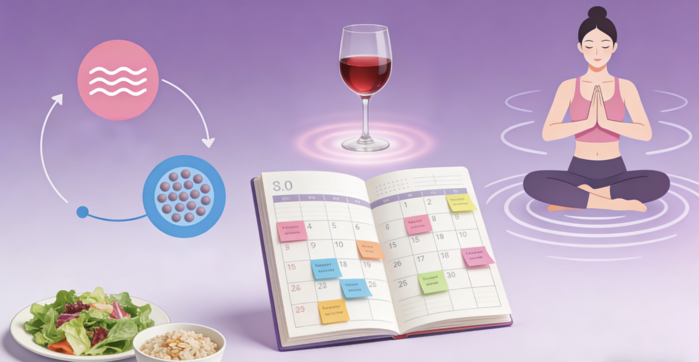
So… Is Your Glass of Wine Wrecking Your Cycle?
It depends on:
- how much you drink
- when you drink
- your existing hormonal health
- your fertility goals
- your age
- your stress and sleep levels
For some women:
One glass is absolutely fine.
For others:
Even one drink can throw off ovulation by a day or two, or worsen PMS, or make IVF cycles more unpredictable.
If you’ve been struggling to conceive or track your cycle accurately, lowering (or temporarily removing) alcohol can be an easy win — and many people are surprised how quickly symptoms improve.
Final Thoughts
Alcohol isn’t the enemy — but it’s not harmless either, especially when hormones and fertility are involved. Understanding how it affects your menstrual cycle empowers you to make choices that support your body, your fertility, and your long-term health.
Whether you cut back, quit entirely, or continue enjoying the occasional glass, what matters most is listening to your body.
ADVERTISEMENT

ADVERTISEMENT
Anya Hindmarch - I AM A PLASTIC BAG
ADVERTISEMENT
ADVERTISEMENTUp to 30% off Gift Sets |